Considering a deep energy retrofit? If you want lower bills, more comfort, and a healthier home but don’t know where to begin, this guide is for you. With a clear plan and the right team, a deep retrofit becomes manageable. For homeowners in Vancouver or the Lower Mainland, this overview simplifies the process. If you didn’t catch Part 1, get caught up here.
Step 1: Start with an Energy Advisor (Before You Design a Thing)
Most renovations start with a design. You hire an architect to draw up plans, then a contractor gives you a quote. For a deep retrofit, that order doesn’t work well. Instead, your first call should be to an Energy Advisor.
An Energy Advisor is a certified professional trained to evaluate your home’s energy efficiency. They use specialised computer software to model your home’s energy use. The advisor will assess your current home, discuss your goals, and run computer simulations to identify which improvements will be most effective. For example, they can tell you if exterior insulation (extra insulation added to the outside of your home) will help, how much is beneficial, which types of windows offer the greatest value, and whether a heat pump (an energy-efficient system that moves heat from one place to another) or a hybrid system (combining traditional and modern heating) is best for you. The Energy Advisor answers these questions before anyone starts designing.
When choosing an Energy Advisor, look for someone registered with Natural Resources Canada (NRCan) or a similar certifying group. You can find qualified advisors through the NRCan online directory, your local municipality, or through BC Hydro and FortisBC. Ask about their experience with deep retrofits and check references from other homeowners.
With your Energy Advisor’s insights ready, you’re prepared to move forward. The next stage focuses on understanding the specific requirements and incentives available in your local area.
Step 2: Understand Your Local Requirements & Available Incentives
Building codes vary widely across the Lower Mainland. Before you finalise your design, check what the BC Energy Step Code requires for your specific address and project type.
Here’s what to know: the Energy Step Code is a provincial set of guidelines that establishes minimum energy-efficiency requirements for new buildings. Each municipality (city or district) decides how strictly it will adopt these standards. For example, Vancouver often sets higher energy performance requirements for buildings than cities like Burnaby or Surrey. Some cities have also adopted the Zero Carbon Step Code, which requires buildings to use less carbon-intensive energy sources, such as natural gas. If you are replacing a gas furnace (a device that heats your home using natural gas), you may be required to install an electric heating system instead.
Available rebates and incentives:
- BC Hydro: Rebates for heat pumps, EV chargers, and energy-saving lighting
- FortisBC: Rebates for insulation upgrades, windows, and high-efficiency heating equipment
- Home Energy Navigator: Available in some municipalities (like Vancouver and North Vancouver), this program gives you a free “Energy Concierge” to help with rebates and finding qualified contractors.
- Social Housing Energy Savings Program (SH-ESP): Up to $800,000 for deep retrofits in non-profit housing
A few tips to make rebates easier:
- Check if the program applies to your property type (primary residence, rental, non-profit)
- Confirm any residency or income requirements.
- Note restrictions around property age or size
- Find out whether you need pre-approval or must apply within certain timelines.
- Staying ahead on these details keeps your project moving smoothly.
Step 3: Choose Your Team Wisely: The Case for Design‑Build
One of the most important decisions is choosing your team.
The traditional route—hire an architect, then hire a contractor—often creates problems. The architect designs without input from the people who’ll build it. The contractor gets plans that are hard to execute. Energy goals get lost somewhere in between.
A design-build firm keeps everything under one roof, with architecture, engineering, and construction working together from day one. Your designers and builders meet with your Energy Advisor as a team. Everyone stays on the same page, and one group is accountable for the project.
With design-build, you get:
- One team that already knows how to work together
- Builder input during design (no surprises when construction starts)
- Reliable coordination between trades, especially for critical work like air sealing
- One contract, one budget, one person to call with questions
- With a coordinated team, you can move confidently from planning to construction, knowing everyone understands their roles.
Step 4: The Build
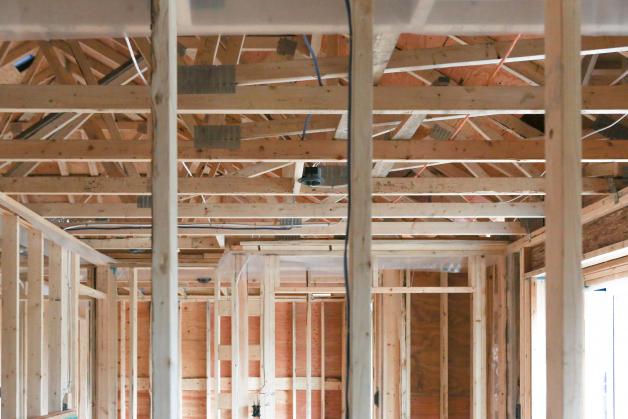
Once construction starts, a deep retrofit requires more attention to detail than a standard renovation. You’ll want to stay in touch with your project manager to make sure key work is done right: the air barrier is properly sealed, windows are installed with correct flashing, and insulation is installed without gaps.
The mid-build test
Halfway through construction—before the drywall (the interior wall covering) is installed—your team will conduct a blower door test. This is a test where a powerful fan is set up in your doorway to pressurise the house and find air leaks (places where outside air can enter your home). Because the walls are still open, any leaks identified can be sealed immediately, when it’s easiest to fix. This test ensures your finished home meets the airtightness targets you and your Energy Advisor planned for.
What to expect during construction
Your project manager will keep you updated with regular progress reports, clear budgets, and a set schedule. No surprises.
Depending on the scope of work, you might be able to stay in your home during some phases. But bigger projects may mean moving out for a while—talk with your design-builder early to plan ahead.
The Final Step: Enjoy Your High‑Performance Home
When the work wraps up, you’ll have a home that’s healthier, quieter, more comfortable, and cheaper to run.
For a detailed review of the process and outcome for these Burnaby homeowners, check out our latest video:

What does it cost?
Deep retrofits in the Lower Mainland typically cost between $60,000 and $150,000 or more. The final cost relies on factors such as your home’s size and age, the amount of insulation you add, how many windows you replace, and the type of heating and ventilation systems you choose (e.g., heat pumps or traditional furnaces). Custom features and the physical access to your home site also play a role.
According to the Government of British Columbia, homeowners here can expect a payback period of about 13 years for window upgrades—and that’s before factoring in increased comfort and resale value.
You’ll also know you’ve contributed to the Lower Mainland’s climate goals.
Ready to Start?
At Kenorah, we guide homeowners through every step of the deep retrofit process. From your first meeting with an Energy Advisor to the final blower-door test, our design-build team handles your project with care, transparency, and a sharp focus on results.
Contact us to set up a no-obligation consultation. We’ll sit down together, talk about your home and your goals, and start figuring out what a deep energy retrofit could look like for you.
Reach out to discuss your vision and let’s make it a reality, together.