As we head into colder months, you may notice draughts, chillier basements, or higher energy bills. These are all signs of an inefficient home. The good news is that almost any home, regardless of its age or condition, can achieve noticeable improvements in comfort and efficiency with the right upgrades. Renovations are now increasingly about making homes work better, not just look better. In Vancouver and the Lower Mainland, strict rules and costs make improving efficiency and value more critical than ever.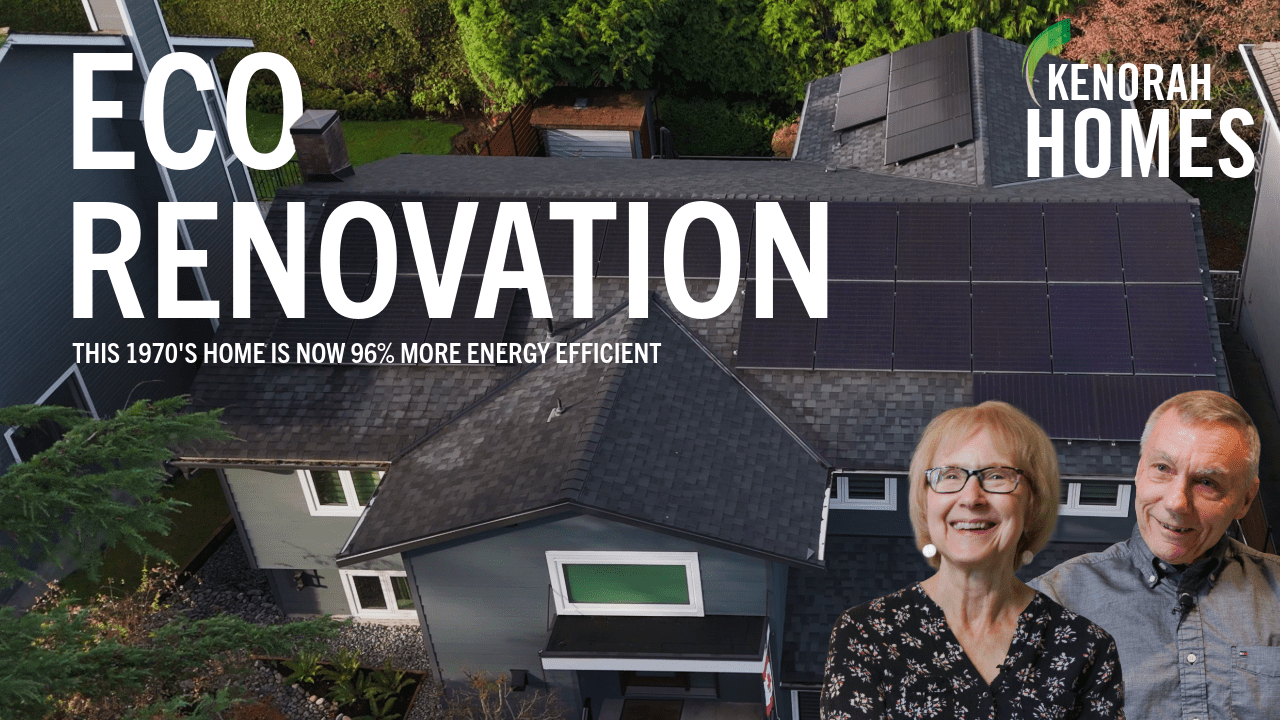 Watch the full video
Take The Forwoods, for example. They own a 1970s home in Burnaby and thought draughty rooms were just part of living in an older home. After a deep retrofit, they say that it feels like a completely different home. It’s quieter, more temperate, and their energy bills have dropped by more than 90%. That’s what a deep energy retrofit can do.
Why Now?
Faced with rising living costs and new bylaws, a deep energy upgrade is wise for older homes. BC Hydro rates and FortisBC costs continue to rise, making efficiency renovations a smart way to offset increases and secure lasting value and comfort (Source: FortisBC).
Not only is an energy renovation a valuable investment, but it may also be required by your municipality. The Energy Step Code is a set of building standards that sets net-zero (no net carbon emissions) targets for new buildings and major renovations in BC (Source: Government of British Columbia). Your city might have its own rules, such as the 2025 Vancouver Building By-law (VBBL), which requires incorporating energy-efficient measures into any renovation. Make sure you know which codes apply to your project. These rules usually affect insulation (materials that slow heat movement), windows, and heating systems (Source: FortisBC).
Energy renovations also offer health benefits by sealing and ventilating your home to bring in filtered fresh air while removing dust and irritants. This is helpful for people with sensitive lungs and improves your home’s overall comfort (Source: Vancouver Coastal Health)
The good news: rebates from BC Hydro, FortisBC, and programs like Social Housing Energy Savings can save you thousands on heat pumps, insulation, and EV charging (Source: FortisBC). For details on local bylaws and rebates, contact your building department or a certified energy advisor. If this seems daunting, an experienced designer or project manager can guide you.
What is a deep energy renovation?
So, what distinguishes a deep renovation from basic upgrades? . Let’s examine the differences. A “deep energy retrofit” refers to a thorough home improvement process that upgrades all major systems—insulation, heating, cooling, windows, and ventilation—to maximise energy savings. (Source: Wikipedia)
A basic renovation might swap out an old furnace or add attic insulation. A deep retrofit is more holistic. It treats your home as an integrated system—the exterior shell, HVAC, ventilation, and their interactions. The aim is a home that is more efficient, comfortable, and resilient.
A deep retrofit upgrades your home’s shell and main systems for maximum comfort and efficiency. The process typically involves improving insulation, windows and doors, electrifying key systems, and upgrading ventilation—all working together to create a more efficient home. Here are the main steps:
- Adding high-performance insulation involves installing advanced, heat-resistant materials in your home’s attic, walls, floors, and exterior. This reduces heat loss and maintains a consistent temperature.
- Replacing windows and doors with triple-glazed or modern, tightly sealed windows and doors reduces drafts and leaks.
- Electrifying your home means replacing gas furnaces and water heaters with electric heat pumps (devices that move heat using electricity) and other efficient electric appliances. Heat pumps transfer heat between indoors and outdoors, efficiently warming or cooling your home. This transition cuts gas use and complies with new energy standards for cleaner electric systems (Source: California Energy Commission)
- Upgrading ventilation results in balanced fresh-air systems supply equal amounts of filtered, fresh air and exhaust stale air, maintaining healthy indoor air and controlling moisture. These systems often use heat recovery ventilators (HRVs) or energy recovery ventilators (ERVs), which save energy while providing fresh air (Source: Building Science Centre of Excellence, BCIT).
These four areas form the backbone of a deep retrofit. But if you stop there, you overlook some essential details. The difference between an average energy upgrade and a high-performing home often hinges on a few specialised techniques, typically using targeted building strategies or products beyond standard practice. They’re not always included in a typical renovation, but they dramatically impact how your home feels and operates. These include:
Air Sealing
You can add as much insulation as you want, but if gaps remain, your home will still feel drafty. Air sealing uses devices like Aerobarrier, which blow pressurised air and a sealing mist to detect and seal small leaks. After sealing, your home exchanges indoor and outdoor air less than once an hour, making it more airtight, comfortable, and energy-efficient (Source: AeroBarrier Air Sealing Experts).
Thermal Bridging
Even if you have good insulation, heat can still escape through parts of your home where insulation is interrupted, like the wooden studs or metal frames inside your walls. This is called thermal bridging. Think of it like heat finding a shortcut out of your home through these hard materials, slipping past the insulation you’ve added.
To fix this, many deep retrofits use continuous exterior insulation. This means adding a layer of insulation all around the outside of your house, like wrapping it in a cozy blanket. Common materials include rigid foam boards (which are solid, dense plastic panels) or mineral wool (made from spun rock fibers). This extra layer covers over gaps and frames, making it much harder for heat to sneak out and also helping to keep moisture away from your walls.
This is especially important in coastal regions like the Lower Mainland, where the weather changes a lot and there’s plenty of dampness. Upgrading insulation and reducing thermal bridging keeps your home warmer in winter, cooler in summer, and cuts energy bills.
Mechanicals
A high-performance home needs a well-designed mechanical system. Modern ventilation systems use MERV filters (filters that trap tiny airborne particles based on a Minimum Efficiency Reporting Value). A high-performance home requires a precisely engineered mechanical system. Modern ventilation uses MERV filters (rated by the Minimum Efficiency Reporting Value scale to capture tiny airborne particles), UV lights (which use ultraviolet light to neutralise germs), and balanced systems (that introduce fresh air and expel stale air while regulating humidity). Combined, these components ensure healthy indoor air while conserving heat (Source: Meridian HVAC & Refrigeration).
The Bottom Line Is Comfort & Value
Cost is important. Deep energy retrofits can be a big investment, sometimes coming out to thousands thousands or even upwards of $100,000. Provincial and federal rebates can reduce these costs by up to $15,000, making upgrades more affordable (Sources: Vancouver Heritage Foundation).
It’s also a way to add a significant boost to your home’s value. Deep retrofits also boost home value, as a sealed home keeps moisture out and helps prevent rot and mould, thereby increasing durability. Good insulation protects the structure, and data suggests lower-power homes in the Lower Mainland sell for more. These advantages can last decades (Source: FortisBC)
Ready to take the next step? Now that you know the reasons, learn how to start your retrofit journey.
Now you know why energy renovations matter, don’t miss our next post about how to get started. Good planning and expert advice make the process easier. An experienced company can connect you with the right energy advisor and help you navigate the complex process of understanding the various bylaws, regulations, and rebates that are essential to your renovation.
A well-upgraded home, fresh air moves easily and a tighter shell keeps you comfortable all year. Upgrades you make now will serve you in the future. Stronger walls mean fewer problems, and smart choices early on lead to better long-term results. Everyday comfort is the goal (including for your wallet). That’s what a deep energy retrofit delivers.
Part 2: A Step-by-Step Guide to a Deep Energy Retrofit in the Lower Mainland
Reach out to discuss your vision and let’s make it a reality, together.